The Secret Room in Peterhead
Nicola Sturgeon has announced details of the further relaxation of restrictions across Scotland.
From Monday 26 April, hospitality venues such as cafes, pubs and restaurants can reopen, along with tourist accommodation.
Non-essential retail outlets and close contact services such as beauty salons can also reopen, in addition to indoor attractions and public buildings such as galleries, museums and libraries.
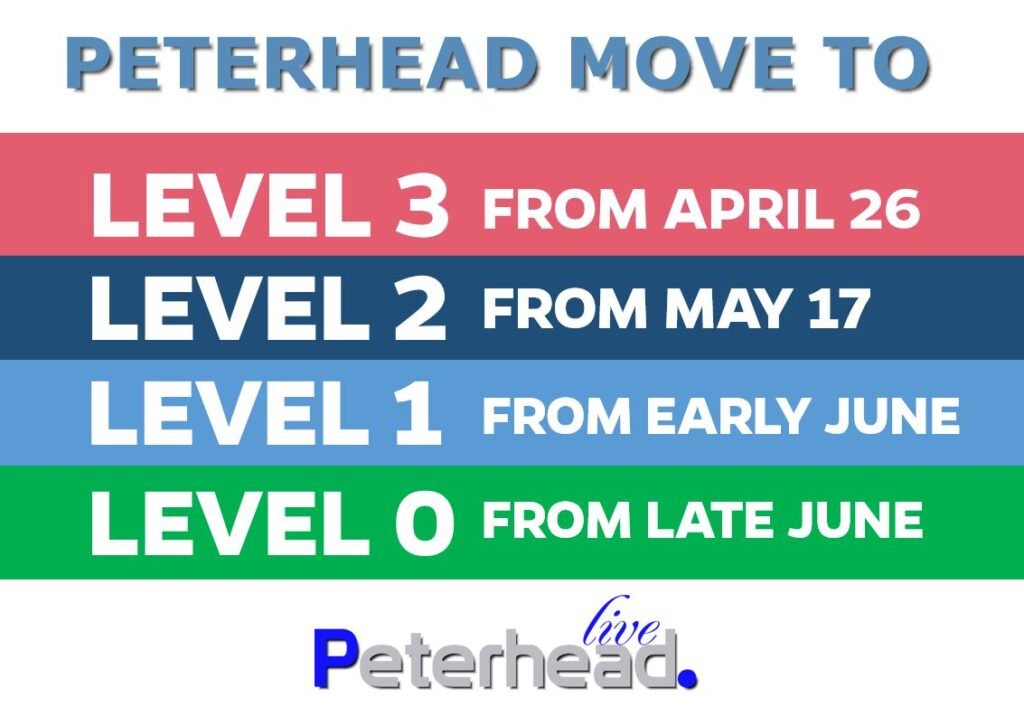
The First Minister confirmed that all parts of the country will move to Level 3 from Monday 26 April. The remaining travel restrictions within Scotland will be lifted and travel within the UK will be permitted for any purpose.
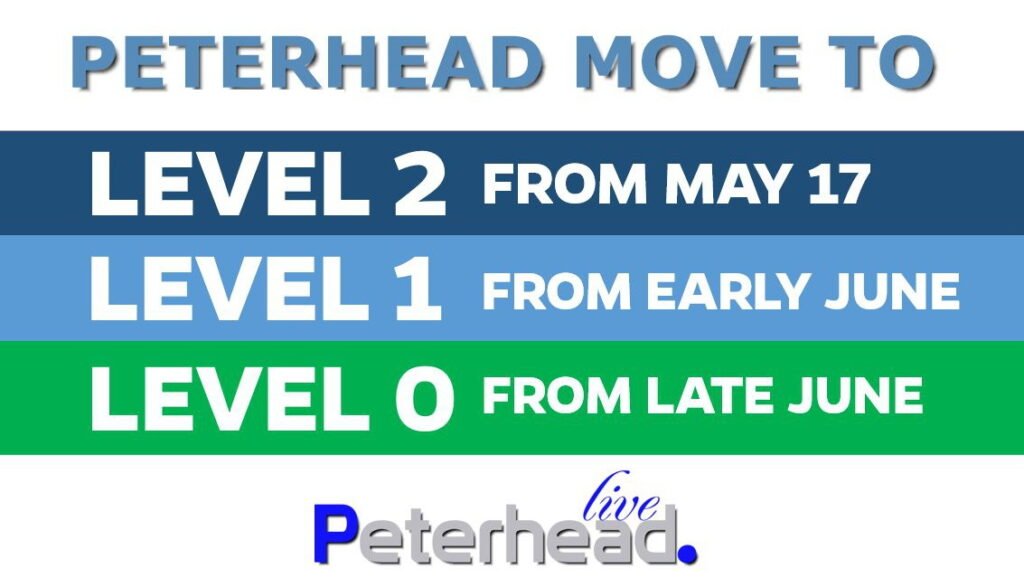
If everyone continues to follow the rules, the First Minister said it is expected that all of Scotland will move to Level 2 on Monday 17 May.
Further changes from 26 April include:

The First Minister also announced that rapid coronavirus (COVID-19) tests will be made available to anyone in Scotland and to those planning travel to the islands.
From today, anyone planning travel to the islands next week can order a free home test kit online. The first test should be taken three days before travel and the second on the day of departure.
From Monday, lateral flow home test kits will be available to anyone in the wider population who does not have COVID-19 symptoms. They can be picked up from local walk/drive-through test sites for people to test themselves twice-weekly. Anyone in Scotland who develops COVID-19 symptoms should self-isolate and book a PCR test.
The expansion is aimed at finding cases that would otherwise go undetected, so those people can self-isolate and avoid transmitting the virus to those around them.
First Minister Nicola Sturgeon said:
“The changes that come into force next week have been hard earned by all of us. I know that many will be looking forward – quite rightly – to their first drink in a beer garden, to catching up with a friend in a café, or to going on holiday somewhere in Scotland.
“But even as we enjoy those moments, we still need to be careful. We must remember the virus is more infectious now than it was when bars and cafés were last open, so we must still stick to the rules. However, we are hopeful of seeing sustained progress in the weeks and months ahead.
“We are keeping island communities in Level 3 at the moment, so that we can allow travel between those communities and the rest of Scotland. If you are planning to travel to an island and do not have COVID-19 symptoms, we will encourage you to take two lateral flow tests for COVID-19 before you depart. This is an important way to reduce the risk of bringing COVID-19 into island communities. If you are travelling to an island next week, it is possible to get tests from today, and I would encourage you to do that.”
Aberdeenshire active will be back from next Monday (April 26th) Aberdeenshire active will begin to re-open Live Life Aberdeenshire’s leisure facilities. The facilities below will reopen on week commencing April 26th – May 2nd 2021.
For more information, including facility timetables and contact details, promotional offers and how to book your visit, see: https://bit.ly/LLAWBack
If we can do so, some of our other leisure facilities may also open next week, however we plan for all our sites to re-open by the 16th May except for Turriff Swimming Pool which is undergoing essential maintenance and is expected to re-open in July.
Customers are asked to keep following their local Facebook pages for up-to-date information around their own reopening plans.
All customers are asked to book and pay for their chosen activity before attending via our online system. Bookings for the above facilities will go live 6 days in advance.
For more information, including facility timetables and contact details, promotional offers and how to book your visit, see: http://bit.ly/SPAbook While Live Life Aberdeenshire is operating on a reduced basis, membership options will not be available and participation will be on a Pay as You Go basis until further notice.
Customers who had purchased a festive promotional pass in December will be able to restart their pass, anyone wishing to do so should contact our membership team on 01467 532929 from Tuesday 20th April at 12 noon.
Meanwhile customers who wish to purchase a 30-day pass can do so, options for these can be found by visiting http://bit.ly/SPAbook
A spokesperson for Live Life Aberdeenshire commented ‘We are delighted to be reopening facilities to the public again over the next few weeks.
Customers can be reassured that our staff have been working hard to ensure your visit is a safe and enjoyable one and our staff are keen to see you back as soon as possible’ The alternative swimming lesson programme will re-start as soon as possible in each facility.
Customers who were signed up for the alternative programme will be contacted via email from Wednesday 21st April onwards with plans.

Follow Live Life Aberdeenshire and your local facility page on Facebook or Twitter for the latest updates.


The latest announcement on Scotland’s journey out of lockdown means people will be allowed to meet in groups of up to six adults from six households in outdoor settings from Friday.
In addition, people will also be permitted to travel across Scotland and Aberdeenshire as long as they do not stay overnight.
These changes had not been due to come into force until 26 April but the Scottish government said they were being made earlier than originally planned in an effort to boost people’s mental health and wellbeing.
Virtually all pupils will return to school full time after the Easter holidays.
The only exception is for those in the shielding category, who must stay at home until 26 April.
Secondary school pupils will no longer have to follow strict two metre physical distancing rules when they return, but they must wear face coverings at all times.
All primary school pupils had returned full-time by mid March, but before the Easter break secondary pupils were taught using blended learning – a mix of home and classroom study.

All remaining shops and close contact services like nail salons are due to reopen on 26 April.
Pubs, bars, cafés, restaurants and bars will be able to serve people outdoors – in groups of up to six from six households – until 22:00 from that date. Alcohol will be permitted, and there will be no requirement for food to be served.
Takeaways will be able to resume normal service, with physical distancing and face masks worn in premises
There will also be a partial resumption of indoor hospitality – food and non-alcoholic drinks can be served until 20:00 for groups of up to four people from no more than two households. Contact details will still need to be collected.
Indoor gyms and swimming pools will be allowed to open for individual exercise, driving lessons and tests will take place, and non-essential work in people’s homes can resume.
Scotland will return to a levels system, with the entire country initially moving to a modified version of the current level three restrictions.
Island communities – which have been in level three for some time – will stay in the same level as the mainland at first to allow people to travel between areas.
Non-essential journeys to other parts of the UK and the wider common travel area should also be permitted from 26 April.
Tourist accommodation, museums, galleries, libraries can also open from this date.
The number of people allowed to attend a wedding or funeral rises to 50.
People on the shielding list will be able to return to work, college, school or nursery.
Three weeks later, on 17 May it is hoped most, if not all, council areas will be able to move from level three to level two, allowing much more normality.
People should at last be allowed to meet up inside others’ homes (although this could happen sooner) – initially in groups of up to four people from no more than two households.
Indoor hospitality is expected to resume with alcohol being served and pubs or restaurants allowed to stay open until 22:30 with two-hour time-limited booking slots.
Cinemas, bingo halls and amusement arcades can now reopen.
Outdoor and indoor events such as concerts can also restart, but capacity may be limited initially.
Restrictions on meeting up outdoors will ease further. Adult outdoor contact sports and indoor group exercises can resume.
More students will be back at university or college but with blended learning continuing. Face-to-face support services such as counselling can take place.
The hope is that from 1 June, all of Scotland can move to level one – and by the end of the month to level zero, the lowest category of the five tier system.
In early June it is hoped up to six people from three households can socialise indoors, at home or in a public place.
Outside up to eight people from three households can meet while for 12 to 17-year-olds the limit on the number of households rises to eight.
Hospitality will be able to stay open until 23:00 and the number of constraints on events such as concerts will be relaxed.
Indoor non-contact sport will resume. Casinos, funfairs and soft play can re-open.
The risk of importing new variants of Covid means a big question mark hangs over non-essential international travel, for instance for holidays.
It will almost certainly not be allowed before mid-May, and the government warns it may not resume for some time after that.
When it is allowed, pre-departure and post-arrival testing will remain a requirement.
From the end of June there will be a phased return of some office staff and increased numbers at places of worship or other events such as weddings.


This gravestone in one of Peterhead local cemeteries hides a tale of Arctic exploration and adventure. The stone commemorates Alexander Robertson, formerly a crewman on the steamship Eira, which was built by the Arctic explorer Benjamin Leigh Smith in Peterhead.
Benjamin Leigh Smith paid for Alexander’s headstone.
Leigh Smith was a wealthy man and travelled extensively to the Svalbard and Spitsbergen regions between 1871 and 1882. In 1880 he had the ship Eira (a screw barquentine) built at the Peterhead yard of Messrs Stephen and Forbes. The whaling family, the Grays, helped with the building, with David Gray assisting in the drawing up of specifications. Leigh Smith made his next voyage to the Arctic in 1880, departing Peterhead on board Eira on 22 May.
On this expedition he took William John Alexander (Johnny) Grant as the official photographer. Grant had established a reputation as a polar photographer, having been on many polar expeditions and exhibited his photographs at the Royal Photographic Society, as well as being a Fellow of the Society and of the Royal Geographic Society.
Leigh Smith and his crew of 24 (mainly Scots and Shetlanders as was common for Artic exploration at the time) aimed to explore Jan Mayen, but this was covered in mist. On 11 July, Eira met up with the Peterhead whalers Hope and Eclipse led by John and David Gray.
The crew of the sailing ship ‘Eira’ dismember a polar bear on the ice at the bows of the ‘Eira’ which is moored to the ice. A crew member stands on deck watching.
They were finally rescued by the Dutch ship Willem Barentzs and transferred to the Peterhead whaler Hope for the journey home. It’s thought Alexander Robertson died of the privations his body had suffered on the ice.
Credit to Kenny Bruce

The First Minister Nicola Sturgeon has confirmed today that “virtually all” of Scotland’s high school pupils will be making a full-time return to education after the Easter holidays.
The First Minister Nicola Sturgeon confirmed students will be allowed to return as normal after two weeks off for the half-term break following an assessment of relevant data. There is an exception for children on the shielding list who are recommended to stay at home until April 26.
She said “When the Easter holidays end, virtually all pupils will return to school full-time, so secondary schools will go back to in-person, full-time learning.”

The two-metre physical distancing rule will be scrapped while twice weekly Covid-19 testing is to be introduced in Scotland for staff and students. Nicola Sturgeon said schools should consider how to “strengthen other mitigations” such as ventilation.
Secondary pupils have so far only been able to spend a limited amount of time in the classroom after the Scottish Government closed schools to most pupils for a second time at the beginning of this year.
Hairdressers, garden centres, car showrooms and forecourts, homeware stores and non-essential click and collect services will be able to open from Monday 5 April Business start reopening after lockdown, subject to enhanced safety measures including physical distancing, face coverings and pre-booking where appropriate.
More college students will be able to return to on-campus learning and 12-17 year-olds will be able to resume outdoor contact sports from this date.
Restrictions on non-essential travel across local authority boundaries will remain in place.
People must stay within their council area for non-essential shopping and should only travel to another area for essential shopping if there are no practical alternatives.
People should also continue to work from home where they can to prevent unnecessary contact that could risk transmission of the virus.
The latest easing of restrictions comes as data shows continued suppression of Coronavirus (COVID-19), and progress on vaccination. Virtually all over 65 year olds have now received a first dose of the vaccine, and the average daily case rate is now 539 new cases per day, a decline of more than 75% since early January.
First Minister Nicola Sturgeon said:
“We have made progress both in suppressing the virus and in vaccination, and therefore the changes I previously indicated will go ahead on 5 April.
“The stay at home rule is being replaced by a requirement to stay local – while Covid levels remain high in some areas, and while a lot of people remain unvaccinated, we do not want the virus to spread from areas with relatively high prevalence to areas with low rates of infection. That’s why the current travel restrictions, which prevent non-essential travel outside your local authority area, are really important.
“It will be easier to relax more restrictions in the future if case numbers remain under control, so when things open up slightly this weekend please continue to stick to the rules, and follow the advice and the instructions given by store staff to keep you and the other customers safe.
“Stay at home – for now – protect the NHS, and follow the FACTS advice when you are out and about to help save lives.”
Coronavirus (COVID-19) update: First Minister’s statement – 30 March 2021 – gov.scot
Guidance will be updated on Friday and Monday to take account of the changes confirmed today.
During the pre-election period the usual parliamentary protocol applies and draft regulations will be shared with the COVID-19 Committee.
Consultation with sectors still to reopen is ongoing, towards further decisions on easing to be taken ahead of the next review point on 26 April.
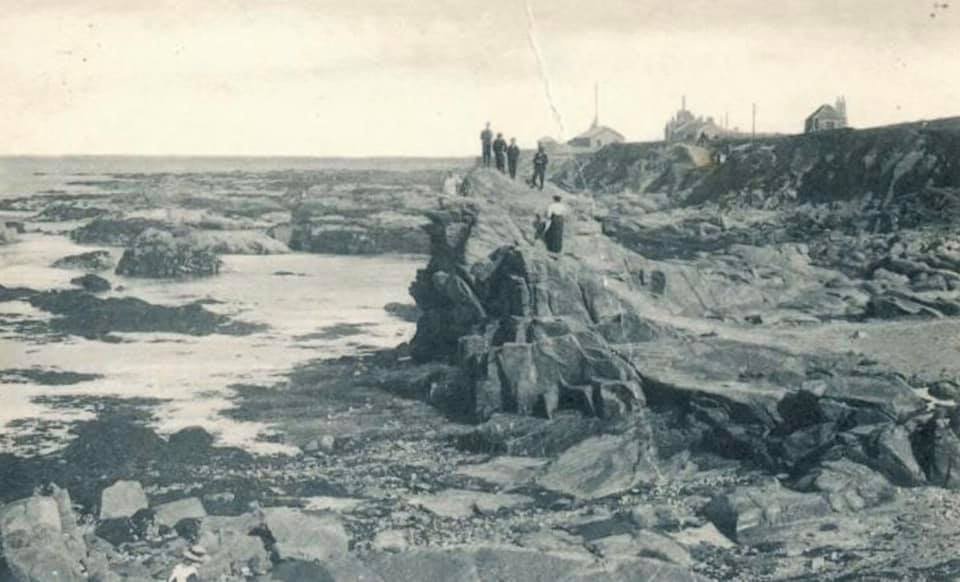
Peterhead History very rich and interesting

Debate Night are inviting people in Aberdeenshire to apply now for episode on Wednesday 31 March.
Members of the general public in Aberdeenshire are invited to apply to join live audience via Zoom and have your say in the evening’s programme. Maybe you are a parent, frontline worker, run a business, a student, have been self-isolating or your work has been affected by Coronavirus; whatever your situation, we want you to apply and be part of the discussion.
As a Debate Night audience member, it is YOUR questions which lead the discussion and the stories, experiences and opinions you share with us that matter most. It is the only TV programme of its kind in the country to allow you the chance to put your questions to Scotland’s key decision-makers and public figures each week.

HOW TO TAKE PART: www.bbc.co.uk/debatenight click ‘Join the Audience’ and fill out an application form.
Previous episodes are available to watch via BBC iPlayer: https://www.bbc.co.uk/programmes/m000htfx
Scotland’s vaccination programme has delivered first doses of the coronavirus (COVID-19) vaccine to more than two million people – 44% of the adult population.
The landmark was reached on Wednesday 17 March. 60 year old Ian Love from Dunipace was among those vaccinated on the day the milestone was reached. The engineering manager received his first dose at Forth Valley College’s Stirling campus, one of a number of community venues being used to deliver the vaccine locally in NHS Forth Valley.
The national vaccination programme continues to move through groups 6 and 7 on the priority list which includes those with particular underlying health conditions and unpaid carers. A self-referral online service has been launched to enable any eligible unpaid carers who have not received an invitation to register themselves.
As groups 6 and 7 progress, we have begun scheduling appointments for the next priority groups which are group 8 (age 55-59 years) and 9 (age 50-54 years) and vaccinations for these groups began at the start of this week.

Heath Secretary Jeane Freeman said:
“More than two million people in Scotland have now received their first dose of the vaccine. That this has been achieved in little more than three months is down to the enormous efforts of our vaccination teams. I would like to thank everyone who is working tirelessly to make this a success, and also every individual who has taken up their offer of a vaccine.
“Scotland’s COVID-19 vaccination programme is now in the final stages of vaccinating the first nine priority groups. When you are offered the vaccine please take up the invitation. The vaccination programme is one of three key ways we are working to beat this virus, along with our expanded testing programme to identify cases and break chains of transmission and the important lockdown restrictions everyone in Scotland must follow. All these measures work to greatest effect when they work together.”
Chair of the Academy of Medical Royal Colleges and Faculties in Scotland Dr Miles Mack said:
“It is remarkable that a year after the first COVID-19 mortality in Scotland, effective vaccines have been developed, and are now being rapidly rolled out across the country. It is a testament to the hard working healthcare staff, military personnel and volunteers that we mark the milestone of 2 million first dose vaccinations, since the vaccine rollout programme began in December.
“We know that the vaccines are safe and effective. They are a vital tool in reducing the number of COVID-19 cases and in ensuring that people are protected against this deadly disease. But there is more work to be done.
Much of the adult population is yet to receive their first vaccine dose, and I would encourage people to take up the offer of a vaccine when they are called. I’d also ask the public to please bear with us while they are waiting their turn to be vaccinated. I know that vaccinators are working through the clinical priority list as quickly as they possibly can.”
Mr Love said:
“I am so pleased to have had my first dose of the COVID-19 vaccine. It is such a relief and it really is starting to feel like we can start to think about a return to normal life.
“I want to thank everyone at NHS Forth Valley – the whole procedure has been simple and the local staff were very reassuring and clearly explained the process. I look forward to getting my second dose in around twelve weeks’ time.”
NHS Forth Valley Immunisation Team Coordinator Gillian Bruce said:
“We are delighted to be marking the delivery of 2 million Covid-19 vaccinations here in Stirling. This achievement is testament to the hard work of local immunisation teams, GP Practice staff and volunteers across the country who are working closely with colleagues in local councils, Health and Social Care Partnerships and the military to deliver this large and complex vaccination programme.”