Music Hall, Peterhead was built in our town, famous throughout Scotland 1873
Music Hall, Peterhead was built in our town, famous throughout Scotland
Uncategorized
Music Hall, Peterhead was built in our town, famous throughout Scotland
If you happened to be strolling along the seashore in town of Peterhead.
You might just notice what look like a couple of old steel cables sticking out of the sand, these old cables are in fact the remains of the Norwegian – Scottish undersea telegraph cable, which had been laid in 1868/1869.
The building you can see on the right of the postcard is the Telegraph Station, where the first news of the Russian Revolution in 1917 was received and transmitted to the rest of the world.
More modern communication methods became normal in the 1920’s and the building was utilized as a small house, until it was demolished in the 1960’s.


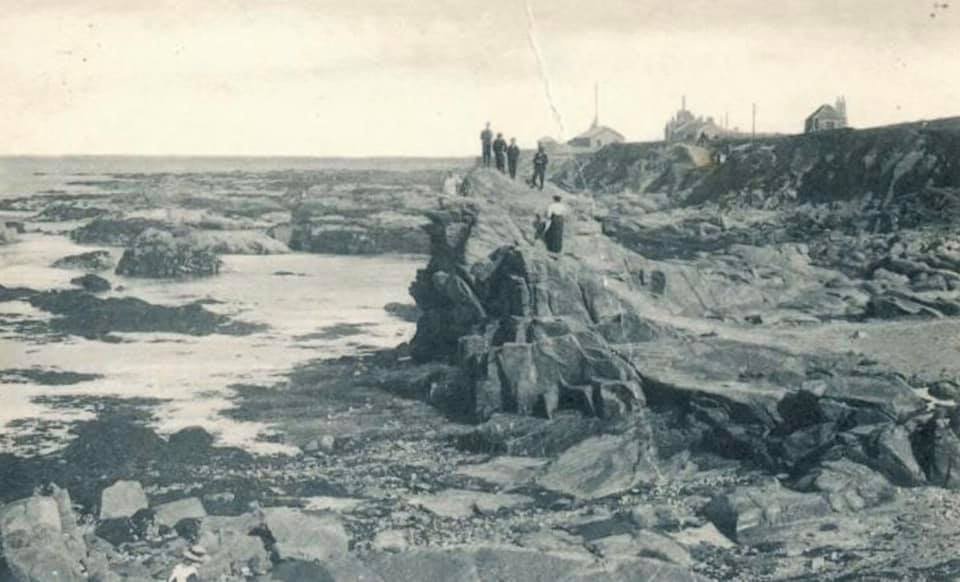
To think that news of one of the most momentous events of the 20th century was first relayed to the rest of the world by them, via our small town on the remote NE coast of Scotland.
Credit to Kenny
Phase 1 – (yesterday) early learning and childcare and schools open for Primary 1-3 pupils and senior phase pupils for essential practical work. Limited increase in the provision for vulnerable children.
Care homes opening to facilitate meaningful contact between relatives/ friends and residents.
Phase 2 – (unlikely before 15 March) – More school reopening – Non-contact outdoor group sports for 12-17 year olds. Socialising rules eased, to allow outdoor meetings of 4 people from 2 households.
Phase 3 – (at least three weeks later – possibly 5 April) Stay-at-Home requirement removed.
Third and final phase of schools reopening if required. Places of worship can open on a restricted numbers basis.
Essential retailers list expanded slightly and click-and-collect resumes for non-essential retail.
Phase 4 – possibly 26 April) Limited other easing within Level 4, including permitting non-essential work in people’s homes. Return to variable Levels approach.
This will enable the graduated opening up of economic and social activity.
The first minister emphasises how she hopes more pupils will return to school in Scotland from 15 March.
This will involve getting the remainder of primary school pupils and more senior phase secondary pupils back into the classroom for at least part of their learning.
Ms Sturgeon adds that she also hopes to restart outdoors non contact group sports for 12-17 year olds in this phase.
And it is hoped the limit on outdoor mixing between households will be increased from four people from a maximum of two households.
The reopening of Scotland‘s economy – including shops, bars, restaurants, gyms and hairdressers – is expected to start in the last week of April, First Minister Nicola Sturgeon has announced.
FM said there would be a “progressive easing” of restrictions before then, with four people from two households allowed to meet outdoors from 15 March.
All primary and more secondary school pupils could return from that date.
It is hoped to lift the stay at home restriction on 5 April.
Ms Sturgeon said it would be necessary to “rely very heavily” on restrictions to suppress the virus for “a bit longer”.
From today, local authorities will start to approach brewers, travel agents and indoor football centres inviting them to claim grants of £10,000 or £25,000. A higher payment of £30,000 will be available to the largest brewers.
Councils will brief around 400 eligible businesses on their potential entitlement and ask them to provide supporting information and bank account details. Owners do not need to apply, or contact the local authority.
Finance Secretary Kate Forbes said:
“We started 2021 in a way none of us envisaged nor wanted, with additional measures in place to limit the spread of the new strain of COVID-19, protect our NHS and save lives.
“These funds recognise the unprecedented challenges that brewers, travel agents and indoor football centres have experienced since March as a result of necessary restrictions.
“We are acutely aware that this support can never compensate for the full impact on business, but we must work within the resources that are available to us, and we continue to respond to the evolving economic challenges arising from the pandemic.”
The Scottish Government has allocated £3 billion in business support since the start of the pandemic on top of support available through the UK Government.
Grants available:
• £10,000 for premises which have a rateable value of up to and including £18,000
• £25,000 for premises which have a rateable value of £18,001 or above
• £30,000 for brewers only operating a property with a rateable value of over £51,000 or production over 5,000HL in 2019
More information on the Brewers Support Fund
More information on Support for Travel Agents
More information on Support for Indoor Football Centres
More than £250 million for drug deaths emergency
A historic deal on the UK’s future trading and security relationship with the European Union has been struck on Christmas Eve, a week before the end of the Brexit transition period, triggering a victory cry from Downing Street and sombre reflection in Brussels.
UK voters opted to leave the EU in a referendum in 2016 by a margin of 51.9% to 49.1%. In Scotland, 62% of the electorate voted to remain.
The deal means businesses in the UK will be able to continue trading with EU countries without paying tariffs, although there will be new barriers such as increased paperwork and checks on imports and exports.
Travellers will soon see new controls as they exit and enter the country and from January 1 will no longer qualify for the European Health Insurance card.
A points-based immigration system for people who want to move to the UK will also begin on new year’s day.
Prime Minister Boris Johnson and European Commission president Ursula von der Leyen were in close contact over recent days to help get the deal over the line.
But negotiations led by the EU’s Michel Barnier and the UK’s Lord Frost continued throughout Thursday as final details were hammered out.
Johnson said: “We have taken back control of our laws and our destiny. We have taken back control of every jot and tittle of our regulation in a way that is complete and unfettered.
“From January 1 we are outside the customs union and outside the single market.
“British laws will be made solely by the British parliament interpreted by British judges sitting in UK courts and the jurisdiction of the European Court of Justice will come to an end.”
Announcing the agreement at a press conference in Brussels, von der Leyen said a “fair and balanced” deal had been struck after months of talks.
She added: “It was a long and winding road, but we have got a good deal to show for it.
“We are long-standing allies. We share the same values and interests, whether it be the Cop26 [climate] summit in Glasgow, or the upcoming UK G7 and Italian G20 presidencies.
“The EU and the UK will stand shoulder to shoulder to deliver on our common global goals.”
Also, Nicola Sturgeon said there was no available deal better than EU membership.
Her tweeted: “Before the spin starts, it’s worth remembering that Brexit is happening against Scotland’s will. And there is no deal that will ever make up for what Brexit takes away from us.
“It’s time to chart our own future as an independent, European nation.”
David Lonsdale, director of the Scottish Retail Consortium, said a tariff-free agreement was “positive news”, although said firms still wanted to see fewer barriers to trade.
“It will protect Scottish consumers from hundreds of millions of pounds of import tariffs on everyday goods, and help retailers to keep down prices at a time when the economy is under enormous pressure.
“Given that four-fifths of food imports come from the EU, this announcement should afford Scots households a collective sigh of relief.
“The UK and EU governments have taken a crucially important step in agreeing a zero-tariff agreement, to the benefit of customers.
“They must now work to implement this new arrangement as soon as possible, and seek to minimise the checks and red tape on imports that are expected from January onwards.”
Douglas Ross, leader of the Scottish Conservatives, said the deal meant jobs in Scotland had been protected and fishing communities would be “far better off”.
Scottish Secretary Alister Jack added: “We have an agreement on fisheries which will ensure that our fishermen, and our coastal communities, will flourish outside of the EU’s unfair Common Fisheries Policy. The UK will once more be a sovereign coastal state.”
However, the Scottish Salmon Producers Organisation warned that while it welcomed a deal, its members still had concerns.
Chief executive Tavish Scott said: “Brexit means the Scottish salmon sector now face the reality of lots more red tape, bureaucracy and paperwork which are the reality of the extra trade barriers which come with Brexit.”
Seed potato farmers in Scotland have also been angered after EU exports of their product was banned, with industry leaders warnings jobs and businesses faced uncertainty.
National Farmers Union Scotland president Andrew McCornick said: “It is good news and a huge relief that a deal has been done.
“The delay in getting agreement has meant that farmers and crofters, who had been forced into making big business decisions for 2021 in a void, now have a degree of certainty that European markets will be accessible next year for most of their products.
“No-deal would have been no good to Scottish farming, food and drink, and the worst-case scenario of crippling tariffs for some sectors, particularly sheep and cereals, has now been averted.
“We will now need to see the detail of what has been agreed and scrutinise it closely.
“On the deeply disappointing news about seed potatoes, NFU Scotland has been highlighting this issue over the course of this year with both UK and Scottish governments. It has been recognised by all as a problem that needs sorted.”
Scottish Labour leader Richard Leonard said the Brexit process should have been extended to keep the focus on the coronavirus pandemic.
The UK and the EU today vowed to continue negotiations – but some nervous shoppers were seen leaving Costco with huge hauls of loo roll, beer and baguettes.
The British Retail Consortium today urged shoppers not to panic – and said retailers are increasing stocks to ensure a “sufficient supply of essential products”.
Any impact to the food chain is likely to affect fresh produce like fruit and vegetables, which cannot be stored for long, officials say.
Without a deal, after January 1 the public will face more than £3billion in food tariffs and higher prices throughout 2021, the trade body said, adding that the uncertainty is making it harder for businesses to prepare.
And today, huge queues were seen outside Costco in Thurrock, Essex, as Brits scrambled to get supplies in.
One shopper was pictured with a huge haul of toilet roll, which was popular with panic buyers during the first coronavirus lockdown.
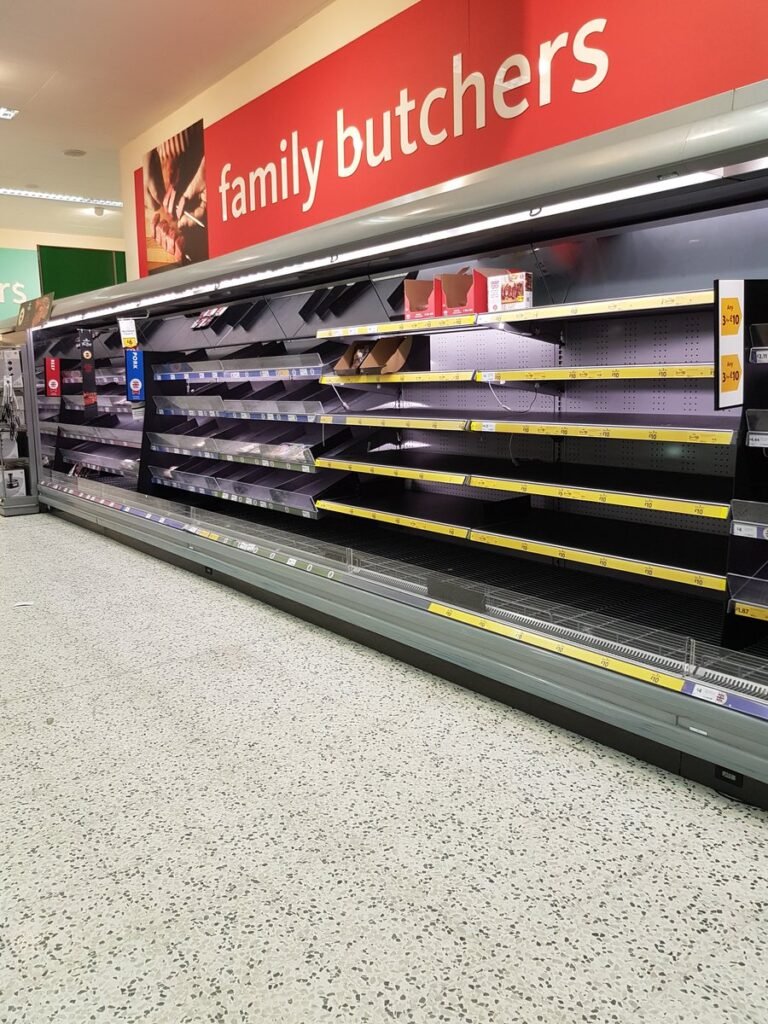
Others were seen with trolleys full to the brim with beer, cereal and other essentials.
It comes after ministers told supermarkets to begin stockpiling food and other goods ahead of a possible No Deal Brexit.
Boris Johnson today declared the UK will not be locked in an EU “orbit” as Brexit showdown talks continue.
Earlier this week, the PM warned that it’s “very, very likely” there won’t be agreement – prompting fears in Government about panic buying.

Follow Peterhead.Live on Facebook for get more actual information
“Very, very likely” that UK will have to start trading with the EU on World Trade Organization terms from 1 January, says PM Boris Johnson.