Promoting Scotland Tourism
Promoting Scotland Tourism

Promoting Scotland Tourism
Moray will be the only local authority area to change protection level as it moves to Level 2 at 00.00 tonight, 21 May 2021, following improvement in coronavirus (COVID-19) prevalence.
Data available this morning showed that in the last week case rates in Moray have fallen sharply, from 98 per 100,000 to 37 per 100,000, and cases of the April-02 variant – the so-called Indian variant – are lower there than in other parts of the country.
Travel restrictions update between Scotland and three local authority areas in England will be restricted from 00:01 on Monday 24 May 2021 due to sustained high prevalence of the virus in Bedford, Bolton and Blackburn with Darwen.
This will be reviewed in a week along with the other measures announced today.
Travel restrictions update – People can travel freely throughout most of Scotland and between most of Scotland and the rest of the UK, other than to, or from, Glasgow. Because Glasgow remains in Level 3.
Nicola Sturgeon said:
“The situation in Moray has improved very significantly – cases and test positivity have fallen markedly and the April-02 variant does not seem to be as commonly present as in Glasgow and some other parts of the country. I can therefore confirm that Moray will now move down to Level 2, taking effect from midnight tonight. This has been made possible by the efforts of local public health teams, their partners, and of course the public – and I am grateful to all of them.

“Extensive public health measures have been deployed in Glasgow city, including enhanced testing and vaccination in the areas with the highest rates of COVID – especially the G41 and G42 postcodes – and enhanced contact tracing has been put in place. Despite all of the efforts that have been made in the last 10 days, however, cases in Glasgow are still rising and we are fairly certain the increase is being driven by the April-02 variant. We are confident that the major public health efforts which are underway will be effective – and that they will bring levels of the virus back under control – but they need a bit longer to do that.
“We also need a bit more time to be more confident that vaccination will stop rising case numbers today becoming sharply rising hospital and severe illness numbers a couple of weeks from now.
“I know how unwelcome Glasgow remaining in Level 3 is for individuals and businesses, but I genuinely hope it will not be for too much longer, and all of us who do live in Glasgow can play our part in getting this under control as soon as possible.
“While the case rates per 100,000 in Glasgow and East Renfrewshire look similar, the total number of cases in East Renfrewshire – because it’s a smaller area – is significantly smaller than in Glasgow. More importantly, many more of the cases that have been reported in the last week in East Renfrewshire can be traced to specific household clusters than is the case in Glasgow, where transmission appears to be much more widespread. That means we think strong and targeted public health measures have more of a chance of stemming the rise, without the need to use wider restrictions.
“We know there are particularly serious outbreaks of the April-02 variant in three specific English local authority areas – Bedford, Bolton, and Blackburn with Darwen. For that reason, from Monday onwards, we are imposing hopefully temporary Travel restrictions update between Scotland and those three local authority areas in England. If you are planning to visit friends or relatives, or to stay in those areas, you must delay your visit. We hope that these rules and guidelines will not be in place for very long, but at the moment they are a further way of reducing the risk that people will bring the April-02 variant into Scotland from those locations.”
Level 2 restrictions will apply across all of mainland Scotland from midnight tonight 21 May 2021, with the exception of Glasgow City local authority area. Travel to, and from, Glasgow continues to be prohibited other than for permitted reasons.
Coronavirus (COVID-19) protection levels: what you can do – gov.scot
Nicola Sturgeon has completed appointments to her new ministerial team.
Consisting of 10 Cabinet Secretaries, including the First Minister, the Scottish Cabinet will be supported by 15 Junior Ministers.
First Minister, Nicola Sturgeon
Minister for Drugs Policy, Angela Constance

Deputy First Minister and Cabinet Secretary for Covid Recovery, John Swinney
Minister for Parliamentary Business, George Adam
Cabinet Secretary for Finance and the Economy, Kate Forbes
Minister for Just Transition, Employment and Fair Work (who will also work alongside the Net Zero Secretary), Richard Lochhead
Minister for Business, Trade, Tourism and Enterprise, Ivan McKee
Minister for Public Finance, Planning and Community Wealth, Tom Arthur
Cabinet Secretary for Health and Social Care, Humza Yousaf
Minister for Public Health, Women’s Health and Sport, Maree Todd
Minister for Mental Wellbeing and Social Care, Kevin Stewart
Cabinet Secretary for Education and Skills, Shirley-Anne Somerville
Minister for Children and Young People, Clare Haughey
Minister for Higher Education and Further Education, Youth Employment and Training, Jamie Hepburn
Cabinet Secretary for Net Zero, Energy and Transport, Michael Matheson
Minister for Environment, Biodiversity and Land Reform (who will also work alongside the Rural Affairs Secretary), Mairi McAllan
Minister for Transport, Graeme Dey
Cabinet Secretary for Justice, Keith Brown
Minister for Community Safety, Ash Denham
Cabinet Secretary for Social Justice, Housing and Local Government, Shona Robison
Minister for Equalities and Older People, Christina McKelvie
Minister for Social Security and Local Government, Ben MacPherson
Cabinet Secretary for Rural Affairs and Islands, Mairi Gougeon
Cabinet Secretary for the Constitution, External Affairs and Culture, Angus Robertson
Minister for Culture, Europe and International Development, Jenny Gilruth
The Old Streets in Peterhead town
From Monday 17 May, Scotland will move to a traffic light system for overseas travel.
You should not International travel to countries on the red or amber lists unless it is for an essential purpose.
What you do when you arrive in Scotland from abroad depends on:
This page:
If you have been in a country or area on the red list at any point in the 10 days before arriving in Scotland, you will only be allowed to enter the UK if either:
You should not International travel to red list countries or areas on holiday, or for any leisure purposes.
On arrival in Scotland, you must quarantine in the hotel you’ve booked for 10 days.
You should not International travel to a country or area on the amber list for holidays or for any other leisure purpose.
This section tells you what you will need to do if you travel to Scotland from a country or area on the green list from 17 May.
If you’ve been in a country or area on the red or amber list in the 10 days before arriving in Scotland, you’ll need to follow the rules for red or amber list countries.
Before travelling to Scotland from a green list country or area, you must:
You will not need to isolate unless:
Before planning International travel, or getting ready to International travel, you should check the latest updates on the country or area you’re travelling to.
Many other countries have rules in place about who can enter and what you can do when you are there. These rules are not related to whether a country is on a red, amber or green list. Before you International travel, you should read the FCDO travel advice for the countries you will visit.
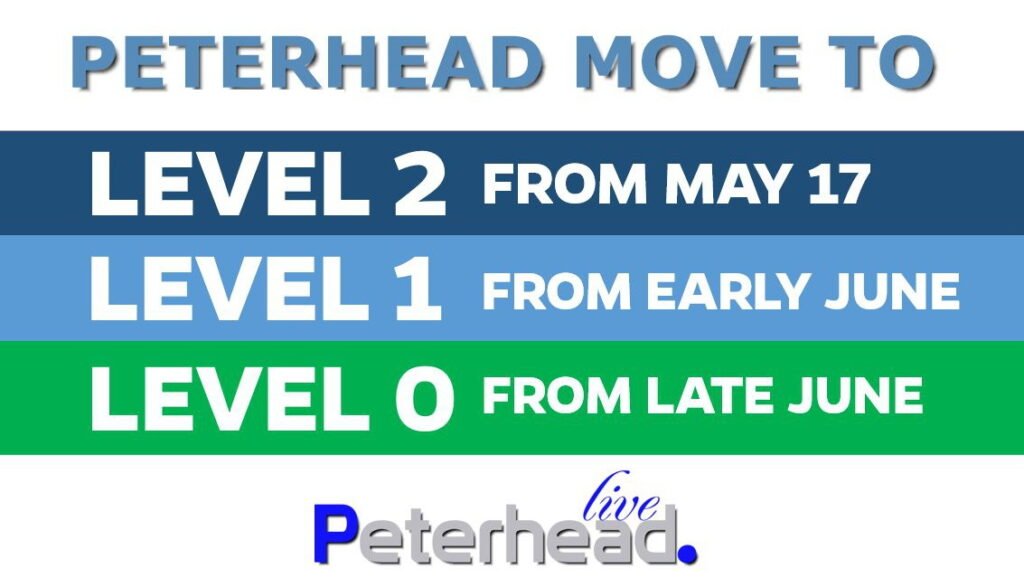
People will be able to hug their loved ones and meet in private homes as most of mainland Scotland moves to Level 2, Out of lockdown, with eased restrictions on hospitality, entertainment, education and sport.
In an acceleration of previous plans, the number of people and households that can meet inside homes in Level 2 has been increased to six people from three households.
The new rules, which come into effect on Monday 17 May, Out of lockdown, will apply to all mainland local authority areas with the exception of Moray, which is experiencing a high and increasing number of Coronavirus (COVID-19) cases. As a result Moray is likely to remain in Level 3 for a further period, with travel in and out of the area prohibited other than for permitted purposes. A final decision on this will be made at the end of this week.
As the virus is now sufficiently under control in the Western Isles, Orkney, Shetland and remote Highland and Argyll islands, these communities are expected to move straight to Level 1.
From 17 May, anyone entering Scotland from countries on a new international travel ‘Green List’ will not be required to quarantine on arrival, but will have to take a PCR test for COVID-19. The Green List will initially be the same as that in place for England but will be subject to review based on Scotland’s specific needs.
Under Level 2 restrictions:
First Minister Nicola Sturgeon said:
“The success of the vaccination programme, and continued high compliance with the various rules and restrictions, means that we have seen continued suppression of the virus in the last three weeks. As a result the situation overall is a very positive one, and we are now in a position to relax more restrictions and restore much more normality to our everyday lives.
“I know just how unwelcome the likelihood of a further period in Level 3 must be to people in Moray, and we are doing everything possible to ensure that any extension of Level 3 is for as short a period as possible. I would appeal to everyone living in the region to follow all the public health advice so that we can get the situation back under control and allow Moray to get back on a positive track just as quickly as possible.
“It is almost eight months since most of us have been able to meet in each other’s homes. While I know all of us have been looking forward to being able to do that again, I would encourage everyone to please use judgement – close physical contact still carries risk, so if you have loved ones who are vulnerable for any reason, you should still be careful. And you should perhaps limit the overall number of people that you choose to have close physical contact with.
“We still intend to be highly cautious on international travel, given the risk of new variants, but we consider that the situation now allows us to begin a careful move away from blanket restrictions on non-essential travel. Everyone should think seriously about whether they really need to travel abroad this summer. I know for many people international travel is about family connections. But when it comes to holidays abroad, my advice continues to be to err on the side of caution and to staycation this summer.”
Background
Coronavirus (COVID-19) protection levels: what you can do
Level 1 restrictions will apply from Monday in:
Countries on the green list are:
If you enter Scotland from a red list country – one of the countries identified as acute-risk under our current regulations – you will be required to enter a managed isolation hotel and stay there for 10 days. Due to changes coming into force from tomorrow, those countries will include Turkey, the Maldives and Nepal.
If you arrive from a country on the amber list – which will be the majority of countries – you must self-isolate at home for 10 days, and take two PCR tests during this period.
A new app – Check in Scotland – was launched at the end of April, to help Test and Protect easily contact people who need to self isolate. Please download and use the app if you can.
Music Hall, Peterhead was built in our town, famous throughout Scotland
From 26.04.2021 everyone in Scotland will be able to access rapid coronavirus COVID testing, even if they have no symptoms.
Free lateral flow home test kits will be available for pick up without an appointment from many local walk-in or drive-through test sites from 3.30pm each day, or by ordering online or by phone, for people to test themselves twice-weekly.
The expansion is aimed at finding cases that would otherwise go undetected, so anyone testing positive can self-isolate and avoid transmitting the virus to those around them.
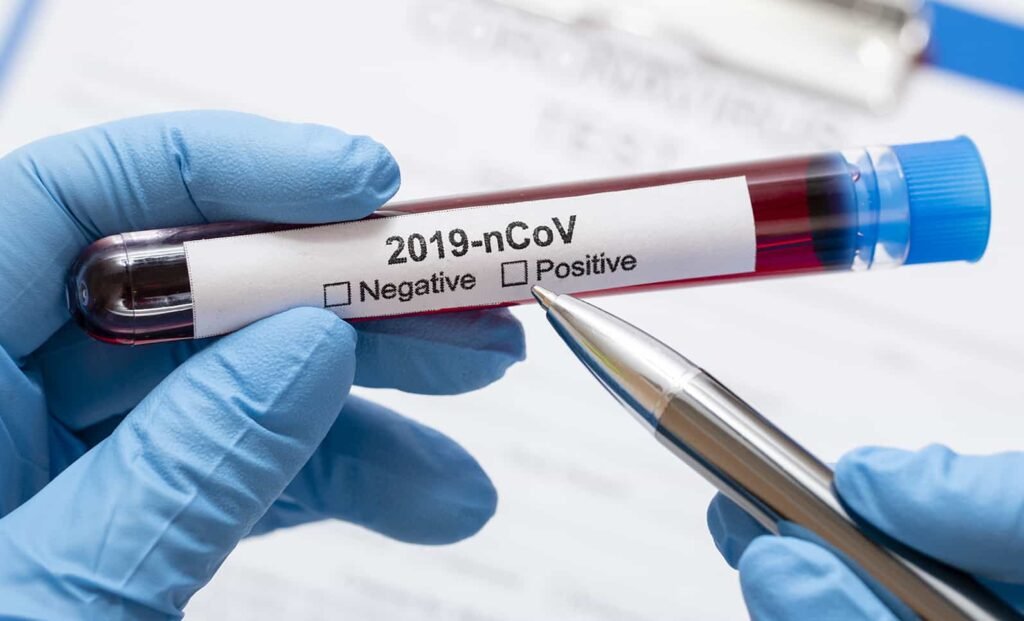
COVID testing, it means anyone without COVID-19 symptoms who does not already have access to asymptomatic testing in their workplace or community can test themselves. This includes anyone planning travel to a Scottish island so they can test themselves before their journey.
Each pack contains seven rapid lateral flow device tests that can provide results in around 30 minutes. A positive result means people should self-isolate with their household and order a PCR test to confirm the positive result.
Support for people who need to self-isolate is available, including a £500 self-isolation support grant for low income workers. People who do not have family or community support can also call the National Assistance Helpline on 0800 111 4000, or contact via textphone on 0800 111 4114.
More information on self-isolation support is available from ready.scot/coronavirus
Anyone who receives a negative result should continue to follow the restrictions and guidance currently in place, including FACTS, as a negative result is not a guarantee that someone does not have COVID-19.
Chief Medical Officer Dr Gregor Smith said:
“This expansion builds on our existing testing strategy, and will help our efforts to ease the country out of lockdown safely. Routine testing is already available for people with no symptoms in a wide-range of settings, including schools, high-risk workplaces, and communities where COVID-19 rates remain stubbornly high.
“Rapid lateral flow testing is already helping us to find cases that might otherwise have been missed, as around 1 in 3 people with COVID-19 do not show symptoms. That’s why it’s vital people can access testing, even if they don’t feel unwell. It will help protect the people around you, and help us avoid another return to lockdown.
“It may be tempting to think as vaccinations increase and cases drop, that testing will become less important. In fact, this will only make it more important to spot and prevent new outbreaks as cases emerge. We know from our experience of last summer just how quickly one outbreak can lead to another.
“This also applies regardless of whether you have been vaccinated or not. While the latest evidence suggests vaccines provide a high level of protection against the effects of COVID-19, they don’t yet provide a guarantee that you can’t still get the virus or pass it on to others.
“By making home tests so widely available to everyone who needs them, people have more options to get tested and our strong advice is for people to take up this offer to protect people around them, and the progress we’ve made so far.”
For more information:
Order a COVID testing kit online, go to: gov.scot/communitytesting
Pre-departure testing covers travel to all Scottish islands. The first test should be taken three days before travel to an island and the second on the day of departure.
People with no COVID-19 symptoms can already access Community Testing in a number of NHS Board and Local Authority areas. You can find the site closest to you at gov.scot/communitytesting
Anyone with COVID-19 symptoms (high temperature, new continuous cough, loss of taste or smell) should self-isolate and book a PCR test via nhsinform.scot/testandprotect or by calling 0800 028 2816.
People with symptoms in the NHS Highland, Orkney, Shetland, or the Western Isles board areas can book a test via their health board website. NHS Highland residents can also call 01463 706015 to book a test at their local fire station.
If you happened to be strolling along the seashore in town of Peterhead.
You might just notice what look like a couple of old steel cables sticking out of the sand, these old cables are in fact the remains of the Norwegian – Scottish undersea telegraph cable, which had been laid in 1868/1869.
The building you can see on the right of the postcard is the Telegraph Station, where the first news of the Russian Revolution in 1917 was received and transmitted to the rest of the world.
More modern communication methods became normal in the 1920’s and the building was utilized as a small house, until it was demolished in the 1960’s.


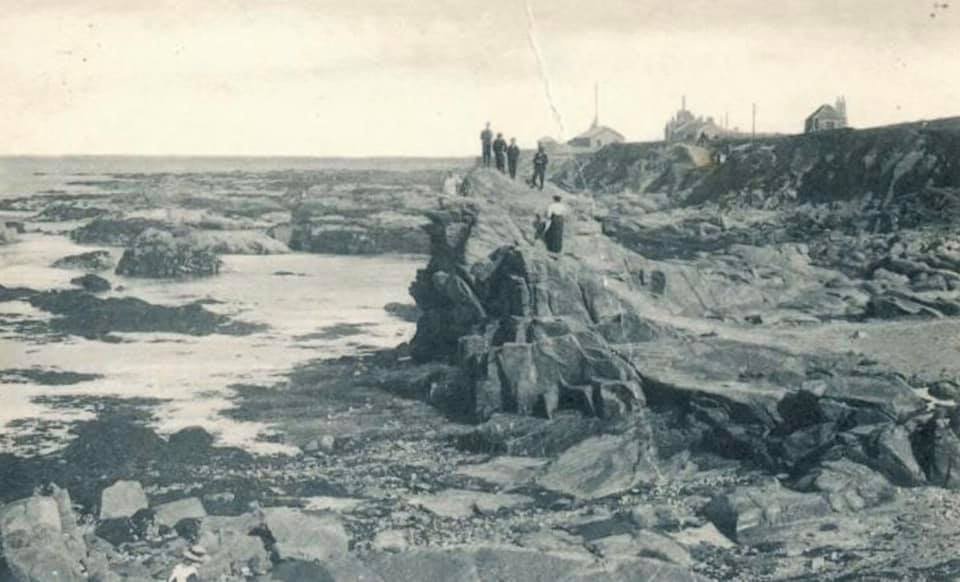
To think that news of one of the most momentous events of the 20th century was first relayed to the rest of the world by them, via our small town on the remote NE coast of Scotland.
Credit to Kenny
The Secret Room in Peterhead