600,000 people to benefit from extension Free dental care NHS for young people
New measures to provide free NHS free dental care for all young people aged 18 to 25 (inclusive) have been introduced at the Scottish Parliament yesterday (Tuesday 15 June).
Amendments to the regulations which cover the cost of NHS dental care will mean around 600,000 young people will benefit from free dental care from the end of August, subject to Parliamentary approval.
In a letter to the dentists, Health Secretary Humza Yousaf said: “The oral health of young people often suffers as they move out of the family home, away from the supervision of parents for the first time. I am also particularly mindful of the disproportionate economic impact of the pandemic on our young people.
“That is why we now are going even further than our original commitment to remove dental charges for care-experienced young people within 100 days of this Government and widening this out to include all 18 to 25 year-olds.
“At the same time, I fully appreciate the challenges that NHS dental teams continue to face during this period. The situation is particularly hard on the dental sector, with added infection, prevention and control measures making it impossible for dental teams to see the same numbers of patients as before the onset of the pandemic.
“We currently have in place a set of emergency financial support measures to mitigate the worst financial impacts of the pandemic on NHS dental services and we recently announced £5 million of funding to support improved ventilation in practices, as well as a 50% increase in free PPE to NHS dental teams.
“We will be discussing financial support with the British Dental Association.”
At present patients pay 80% of the cost of their NHS dental treatment up to a maximum of £384 per course of treatment, unless they belong to one of the existing groups entitled to free NHS dental treatment or qualify for help with health costs through the NHS Low Income Scheme. Patients currently exempt from paying a charge include adults in receipt of certain benefits, expectant mothers and those who have given birth in the last 12 months, and young people under 18 years of age.
Statement given by the FM Nicola Sturgeon on Tuesday 15 June 2021, about Coronavirus Scotland.
The easing of Coronavirus Scotland restrictions is likely to be pushed back by three weeks, First Minister Nicola Sturgeon has said.
The whole country had been due to move to the lowest level zero of its five-tier system from 28 June.
However Ms Sturgeon told MSPs that this was likely to be be delayed by three weeks so that more people can be vaccinated against the virus.
The Coronavirus Scotland case rate is five times higher than it was in early May.
Ms Sturgeon said that “we need to buy sufficient time for vaccination to get ahead and stay ahead of the virus, and that is the reason for caution at this juncture”.
She added: “Doing that will give us the best chance, later in July, of getting back on track and restoring the much greater normality that we all crave”.
At the outset today, I want to confirm that there will be no changes this week to the Covid levels of protection that currently apply to different parts of the country
I will say more about that later, and also look ahead to the more substantive three weekly review that I will set out to Parliament a week today – which is as scheduled ahead of the 28 June, when the next scheduled change, and a move to level 0 for the whole country, was expected to take place.
Firstly, though, I will give a general summary of the current course of the pandemic, starting with today’s statistics.
The total number of cases that were reported yesterday was 974, which is 5% of the total number of tests. That means the overall number of confirmed cases is now 248,515.
137 people are currently in hospital – which is nine more than the number yesterday. And 17 people are receiving intensive care right now. And that is the same number as reported yesterday.
I also regret to say that two further deaths were reported yesterday.
Coronavirus Scotland
That takes the total number of deaths registered, under the daily definition, to 7,683.
And once again, I want to send my condolences to everyone who has been bereaved over the course of the pandemic.
I will also provide an update on the vaccination programme.
However, because of a technical issue at Public Health Scotland this morning, I would ask members to note that the figures I am about to give are likely to under-report yesterday’s vaccination performance.
However, on the basis of the information I do have at this stage, I can confirm that as of 7.30 this morning, 3,531,461 people had received their first dose of the vaccine, which is an increase of 13,793 since yesterday.
And in addition, 23,347 people received a second dose yesterday, and that brings the total number of second doses now to 2,470,181. But I would ask people to remember that those figures are likely to under-report the number of vaccinations that were reported yesterday, and we will update that as quickly as possible.
Coronavirus Scotland
As is clear from the update I’ve just given on the range of statistics, cases do continue to rise. 6,651 new cases have been reported over the course of the past week – that compares to a total of 5,475 in the week before that. So cases have risen by more than one fifth in the last week, and they are now more than five times higher than the situation in early May.
That reflects the fact that the faster transmitting Delta variant is now common across Scotland, and accounts for the overwhelming majority of new cases being reported at that stage.
Now it’s important to point out, given the risk for example of long Covid, we should never be complacent about a rising curve of infections.
However, as I have indicated before, we do hope that vaccination is increasingly protecting people against serious illness. If this is indeed the case, then our experience of this virus will become different, and our ability to cope with it in a less restrictive way much greater.
That is why we continue to very closely monitor the extent to which the rise in new cases is, or is not, leading to a commensurate rise in the number of people who fall seriously ill and require hospital treatment.
Now, our early data on this point is encouraging, and I will say more about that shortly. But we still need further analysis. in particular to more fully understand the impact of the Delta variant.
To that end, a new study published yesterday by Edinburgh University was instructive. And I’d recommend that members read that. On the one hand, it suggests that the Delta variant is associated with a higher risk of hospitalization than other variants. But on the other hand, it suggests that double dose vaccination continues to provide a high level of protection against infection with and hospitalisation from the virus.
This was underlined by another study published yesterday by Public Health England showing extremely strong protection against hospitalisation after two doses of vaccine.
So in short, all of the evidence so far suggests that while it hasn’t yet been completely broken, vaccination is weakening the link between the rise in new cases and a rise in hospitalisations and serious illness.
There is much in these studies about the impact of vaccination for us to be optimistic about.
And as I said earlier, that is reflected in our own hospital data, which of course is published on a daily basis.
The number of people being admitted to hospital with Covid has fallen from around 10% of reported positive cases at the start of the year, to around 5% now.
In addition, since around the start of May, new cases have increased at a much faster rate than hospital admissions.
We are also now seeing some evidence that the people who require hospital care are – on average – younger than during previous stages of the pandemic.
In the latest week for example the highest number of new admissions was seen amongst people in their 30s and 40s. The next highest number was of people in their 20s. Before the vaccination programme started, people over the age of 50 usually made up the highest number of new admissions to hospital.
Now let me stress, we shouldn’t be complacent about hospitalisation for anyone, no matter what age they are.
But the fact that more of the recent hospital admissions are in younger age groups may mean that fewer of the people being admitted to hospital are becoming seriously ill or requiring intensive care. And that may also help to explain my next point.
Hospital occupancy – which is the total number of people with Covid in hospital at any given time – is not rising at the same rate as either hospital admissions or cases of Covid.
Indeed, while there been an approximate fivefold increase in cases since the start of May, hospital occupancy is around just double what it was at the start of May.
What that suggests is that people are being discharged more quickly and spending, on average, less time in hospital than patients were in earlier phases of the pandemic. And again, while that is encouraging, it’s important to stress that further analysis is needed to confirm this.
Which brings me to the judgments we require to make now and next week.
In short, we are hopeful that vaccination is changing the game in our fight against this virus, and perhaps in a very fundamental way. But the emerging evidence still does need close analysis.
And, more fundamentally – and perhaps this is the most fundamental point of all today – we do need more time to get more people vaccinated with both doses. In the race between the virus and vaccines that we’ve spoken about often, we are increasingly confident that vaccines will win that race. But we mustn’t allow the virus to get too far ahead of it.
The vaccination programme is going exceptionally well. It is being rolled out just as quickly as supplies allow. But there is still a significant proportion of the population that isn’t yet fully vaccinated with two doses.
And to be blunt, that remains our biggest vulnerability at this stage, and it is quite a significant vulnerability when cases are rising at the pace they are.
So, we need to buy ourselves sufficient time for the vaccination to get ahead and to stay ahead of the virus. And that is the reason for caution to be exercised at this juncture.
Of course these issues are also being weighed up by the UK Government, and by the other governments across the UK. And of course the UK Government just yesterday announced a four week delay to its plans for lifting Covid restrictions in England.
I have already confirmed today that no changes will be made this week to the levels that apply in any part of the country.
Our next full scheduled review of the protection levels will take place next week. And this will consider whether any changes are possible from 28 June onwards – the date when we had hoped we would see the whole country move down to level 0.
Now, I will confirm our decision to Parliament next week, following that review.
Coronavirus Scotland
However, given the current situation – and the need to get more people fully vaccinated before we ease up further – it is reasonable I think to indicate now that it is unlikely that any part of the country will move down a level from 28 June.
Instead, it is more likely that we will opt to maintain restrictions for a further three weeks from 28 June and use that time to vaccinate – with both doses – as many more people as possible.
Doing that will give us the best chance, later in July, of getting back on track and restoring the much greater normality that we all crave.
To that end, we will also do three other things next week. And I’ll report on all of this this time next week, when I stand here to give a statement.
If our decision is to retain current levels for a further three weeks – and we have to go through the proper process to arrive at that decision – buut if that is the decision, we will consider whether any minor changes are possible.
I am aware very that as restrictions have eased, perceived anomalies have arisen. And I understand how frustrating those can be, even though there will often be a rational explanation for what might appear to be contradictory.
But I can assure members that as part of our ongoing review of the regulations and rules in place, we will consider whether any changes should or could be made to address such issues.
More fundamentally, though, we will publish two pieces of work next week to coincide with the outcome over the review, that look ahead – hopefully not too far ahead – to the restoration of a much greater degree of normality.
This work will be of interest to everyone – but it will have particular interest for the businesses and sectors – including much of our arts and culture sector for example, that still face the greatest uncertainty about what the future looks like.
So firstly, we will publish a paper setting out what we hope life will look like beyond level 0, as we get to the point where we can lift all – or at least virtually all – of the remaining restrictions.
This is important because while we have had to pause the route-map, we do still – and I want to emphasise this point – we do still hope that vaccination will allow us over this summer to move beyond level 0, and back to a much greater degree of normality.
And secondly, related to the first, we will also publish the outcome of our review of physical distancing. Now given the uncertainties of the current situation – in particular the greater transmissibility of the delta variant – we have taken a bit longer to consider this than we had originally planned.
However, I know how important this is for many businesses, in hospitality certainly, but also for theatres and cinemas and the arts more generally, as they all consider how they can operate sustainably over the medium to long term.
So in summary: next week we will, in all probability – although this has to be confirmed after our full review – pause the further easing of restrictions while we press ahead as fast as possible with vaccination, and in particular with double doses of vaccination.
But we will also look ahead in more detail to what we still hope will be possible later in the summer.
I know the current situation is difficult and frustrating for everyone. We all want to see the back of all restrictions as soon as possible.
However, while this setback is not easy, and it’s not welcome for anyone, it is worth remembering that we are living under far fewer restrictions now than was the case just a few weeks ago.
The current situation is not what any of us want. But equally, the current situation is not lockdown as experienced at earlier stages of the pandemic.
And vaccination is – with every day that passes, quite literally – helping us change the game.
On that point, as well as doing all we can as quickly as we can to fully vaccinate the adult population, we are also making preparations for the possible vaccination of 12-17 year olds, should the advice we get from the Joint Committee on Vaccination and Immunisation recommend that.
I can tell the chamber that we are also expecting advice from the JCVI in the coming weeks about whether or not booster vaccinations will be needed during this autumn. So plans are also underway to deliver these if necessary.
The Government has an obligation, one we take very seriously, to ensure that the vaccination programme is delivered as quickly and as fully as possible. And I give an assurance that we will continue to work with health boards and others to meet that obligation.
And despite the difficulties of the current situation, it is vaccination that still offers us real hope for the weeks and months ahead.
Getting people vaccinated is, first and foremost, the responsibility of government.
However, it is also one of the ways in which we can all play a part.
So I’ll end by highlighting again the three key things we all need to do to help keep us on the right track overall as we emerge from the pandemic.
The first of these is vaccination. Please make sure that you get vaccinated when you are invited to do so. And please make sure you attend for both doses. All of the evidence tells us that that is absolutely crucial.
If you need to re-arrange an appointment; or if you think you should have had an invitation by now, and you want to check up on that; you can go to the vaccinations section of the NHS Inform website.
If you had your first dose of the vaccine eight weeks or more ago, check on the website to see if you can bring your second dose appointment forward. From next week, health boards will start to routinely second doses to bring them into the eight week cycle, rather than the 12 week cycle.
Getting vaccinated is in our own best interests. It makes it less likely that we’ll become seriously ill from Covid, but it also helps us protect each other. So when it is your turn, please get the jags.
Secondly, please get tested regularly. Free lateral flow tests are available through the NHS inform website so that you can take a test twice a week. You can have them sent to you in the post, or you can collect them from local and regional test sites. And also now, lateral flow devices can be collected from community pharmacies.
So if you haven’t ordered the tests yet, I would strongly encourage you to do so.
The more of us who take tests regularly, the more cases we will find, and the more we can break chains of transmission.
And of course if you test positive, please make sure that you self-isolate, and get the result confirmed through a PCR test. That is important.
If your children are asked to self-isolate by their school, please ensure that they do that. That means staying at home, not just away from school.
I know that that it is hugely frustrating when that happens – and I want to assure parents that as part of our wider work, we are considering whether and to what extent the requirement for young people to isolate can be significantly reduced in future, particularly as we look ahead to a new school term.
But, for now, to anyone who is currently helping a child to self-isolate, thank you. I know it is frustrating and hugely disruptive.
But it also is an important way, at this stage, to help keep schools as safe as possible, and of course to keep as many of them open as we head towards the summer holidays.
And finally, I’d ask everybody to continue to stick to the rules where you live, and follow the public health advice.
This is still important. The virus is still out there, and for all the success of the vaccination programme, it is still resulting in hospitalisation for some people. And of course, Long Covid is still a risk.
So please meet outdoors as much as possible. No environment is ever entirely risk free, but meeting people outdoors we know poses much less risk than meeting indoors.
But if you are meeting people indoors, please stick to the limits and make sure the room is as well ventilated as possible. That obviously includes if you’re meeting indoors to watch the football over the next few weeks.
And please continue to follow advice on distancing, hand-washing and face coverings.
So in summary, we continue to ask everybody to get tested, to get vaccinated when you’re asked to do so, and continue to follow the public health guidance.
If we all do that – it is not easy, it is tiresome for everybody – but if we all do that we will help to get things back under control while the vaccination programme continues to do its work.
And that will help keep ourselves and each other safe. And I hope, really hope that not notwithstanding the current frustrations, it will allow us to move to much greater normality, with far fewer restrictions, as we go further into this summer.
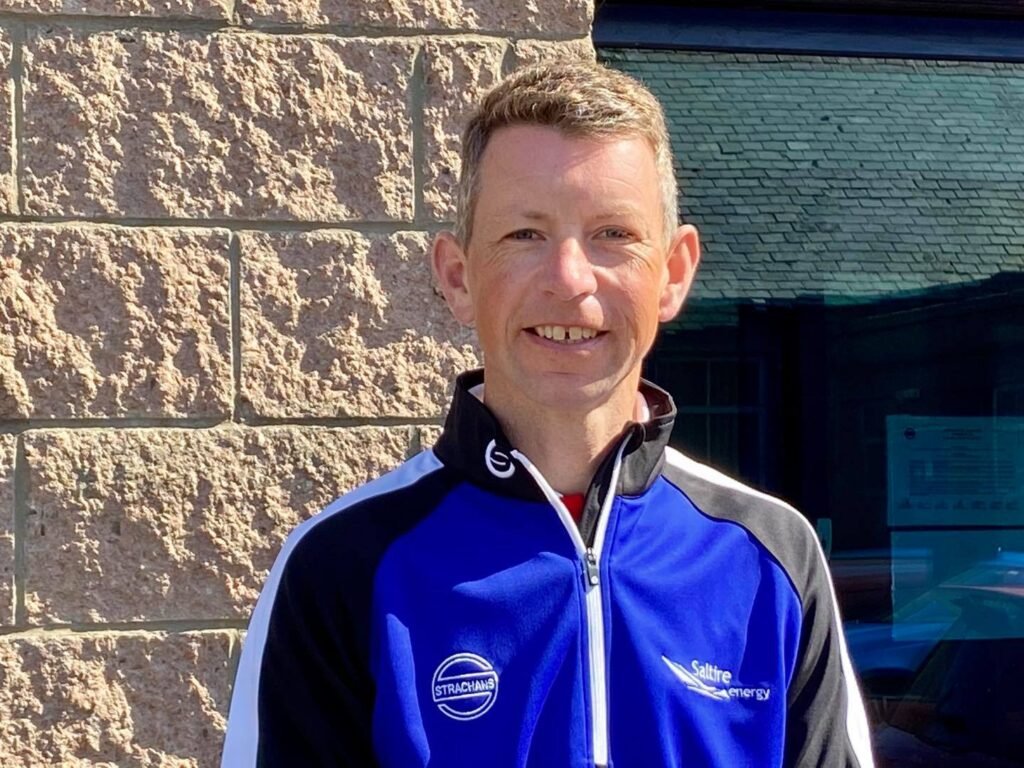
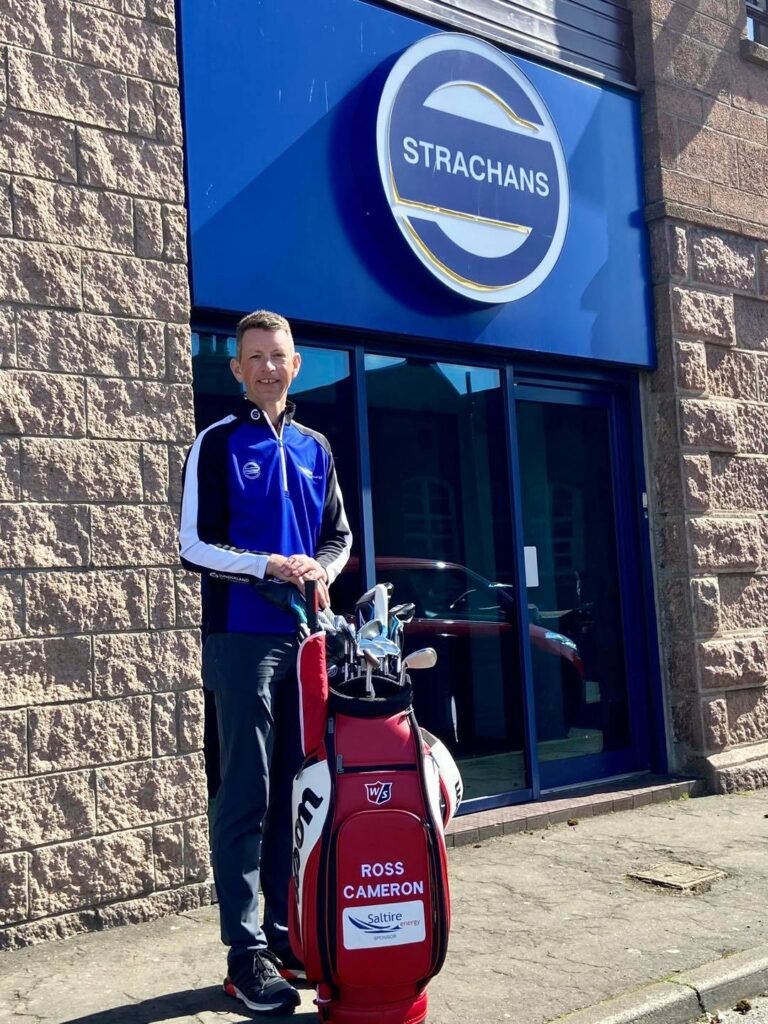
Strachans local company are sponsoring Peterhead based professional golfer Ross Cameron.
Strachans are sponsoring Peterhead based professional golfer Ross Cameron as he looks to build on his fantastic achievements in 2020!
In a very shortened golfing calendar in 2020, due to the COVID 19 pandemic, Ross won the Scottish PGA Championship, the PGA Northern Open and topped the PGA Scottish region order of merit.
Strachans local company are sponsoring Peterhead based professional golfer Ross Cameron.
“Strachans contacted me towards the end of last year to congratulate me on my successes and to offer their help for the 2021 season. With tournament costs relatively high in comparison to prize money on offer, their help is invaluable to me and pretty much necessary to allow me to play these tournaments. It’s great to have a local company sponsoring me as I look to build on the successes of my 2020 season.”
Ross said
In 2021 Ross is competing on the PGA Europro Tour, a third tier development tour with the goal of gaining promotion to the second tier for 2022. This week Ross is competing at an Europro Tour event in Newbury and is currently sitting 3 shots off the lead.
Wishing you all the very best of success in your 2021 season ahead, Ross and we are proud to be sponsoring you this year.
04/09/2020
Ross Cameron achieved the biggest success of his career in winning the Loch Lomond Whiskies PGA Scottish Championship and in doing so experience some sunshine in an otherwise gloomy year.
Cancelled tournaments and shut down golf clubs due to the lockdown meant the 41-year-old from Peterhead had to take on a part-time job in a supermarket to supplement his income.
But those worries were temporarily cast aside at Deer Park Golf and Country Club as he won the Tartan Tour’s flagship event.
Self-Employment Income Support Scheme a 5th grant covering May 2021 to September 2021 will be open to claims from late July 2021
The grant is taxable and will be paid out in a single instalment.
Guidance for claiming the grant will be available by the end of June 2021.
1. Who can claim
To be eligible for the grant you must be a self-employed individual or a member of a partnership.
1.1 When you must have traded
You must have traded in the tax years:
2019 to 2020 and submitted your tax return on or before 2 March 2021
2020 to 2021
You must either:
be currently trading but are impacted by reduced demand due to coronavirus
have been trading but are temporarily unable to do so due to coronavirus
1.2 Your tax returns
To work out your eligibility for the fifth grant, we’ll first look at your 2019 to 2020 Self Assessment tax return. Your trading profits must be no more than £50,000 and at least equal to your non-trading income.
If you’re not eligible based on your 2019 to 2020 tax return, we’ll then look at the tax years 2016 to 2017, 2017 to 2018, 2018 to 2019 and 2019 to 2020.
1.3 Deciding if you can claim
You must declare that:
you intend to continue to trade
you reasonably believe there will be a significant reduction in your trading profits due to reduced business activity, capacity, demand or inability to trade due to coronavirus from May 2021 to September 2021
You must keep evidence that shows how your business has been impacted by coronavirus resulting in less business activity than otherwise expected.
HMRC expects you to make an honest assessment about whether you reasonably believe your business will have a significant reduction in profits.
Self-Employment Income Support Scheme fifth grant
2. How the Self-Employment Income Support Scheme fifth grant is different
The amount of the fifth grant will be determined by how much your turnover has been reduced in the year April 2020 to April 2021.
We’ll provide more information and support by the end of June 2021 to help you work out how your turnover was affected.
2.1 How much you’ll get
Turnover reduction
How much you’ll get
Maximum grant
30% or more
80% of 3 months average trading profits
£7,500
less than 30%
30% of 3 months average trading profits
£2,850
3. When you can claim
The online claims service for the fifth grant will be available from late July 2021.
If you’re eligible based on your tax returns, HMRC will contact you in middle of July 2021 to give you a date that you can make your claim from.
Aberdeenshire and Moray will move to level 1, Glasgow to move to Level 2 and Scotland remains on the right track.
The First Minister outlined the next steps to Parliament and confirmed that Glasgow will move to Level 2 from 00:01 on Saturday 5 June 2021.
The following mainland local authority areas will also remain at Level 2, while the situation with the virus is monitored closely:
East Dunbartonshire, East Renfrewshire and Renfrewshire
East Ayrshire, North Ayrshire, and South Ayrshire
North Lanarkshire and South Lanarkshire
Edinburgh and Midlothian
Stirling and Clackmannanshire
Dundee
At the same time, from 00:01 on Saturday 5 June 2021, these 15 mainland local authorities will move to Level 1:
Highland and Argyll & Bute
Aberdeen City, Aberdeenshire and Moray
Angus and Perth & Kinross
Inverclyde and West Dunbartonshire
Falkirk
Fife
West Lothian and East Lothian
The Scottish Borders
Dumfries & Galloway
Aberdeenshire and Moray
All islands currently in Level 1 will move to Level 0 at the same time due to sustained low numbers of cases. Everyone is encouraged to get tested to help stop the spread of COVID-19 by finding cases that might be missed, as around 1 in 3 people with COVID-19 don’t have symptoms.
First Minister Nicola Sturgeon said:
“I appreciate that today’s decisions will feel like a mixed bag. That reflects the fact that we are in a transition phase. No part of the country is going backwards today. Before the vaccines, that would have been impossible on case numbers like this. But the vaccines are changing the game. And that means we can still be optimistic about our chances of much more normality over the summer and beyond.
“As always, all of us have a part to play in beating this virus back. So please, stick with it, and each other.”
For local authority areas in Level 2, we will be providing support to soft play and other closed sectors that had expected to open, or operate in a different way from 7 June. Full details will be provided by the Cabinet Secretary for Finance tomorrow.
Aberdeenshire and Moray on Level 1: what you can do
you can meet socially in groups:
of up to 6 people from 3 households in your home or theirs – and can stay overnight
of up to 8 people from 3 households in an indoor public place like a café, pub or restaurant
of up to 12 people from 12 households outdoors in your garden or a public place
under 12s do not count towards the total number of people or households meeting outside but do count towards the number of households indoors
you do not need to physically distance from family and friends in a private home
you can travel anywhere in Scotland in Levels 0, 1 or 2 but must not enter a Level 3 or 4 area unless for a permitted reason
you can travel anywhere in England, Wales, Northern Ireland, the Isle of Man or the Channel Islands – before you travel you must check the travel rules in those countries
you can provide informal childcare, for example to look after a grandchild
up to 100 people can attend weddings and funerals
tradespeople can carry out any work and repairs in your home such as painting, decorating or repairing
you should work from home where possible
Aberdeenshire and Moray, What can open at Level 1
Places and business that can open at Level 1 include:
cafés, pubs and restaurants
all shops and stores
all close contact services including hairdressers, barbers and beauty salons
gyms, leisure centres and swimming pools
tourist accommodation
all visitor attractions
all public buildings like libraries and community centres
all entertainment (apart from nightclubs and adult entertainment)
stadiums and events – with maximum numbers
Aberdeenshire and Moray, What must close at Level 1
Places and business that must close at Level 1 include:
Peterhead Community Centre, test has been extended until the end of June
Residents of Peterhead and the surrounding should note that the community testing for those without Covid symptoms has been extended until the end of June.
You can still get tested and also pick up your own pack of lateral flow tests at the Rescue Hall on Prince Street from 8am-8pm. It remains open to anyone who lives, works or studies in and around the town.
By taking the test, residents will be able to better protect their family, colleagues and the wider community by ensuring they are not spreading the virus to others without knowing it.