
New 24/7 Defibrillator in Peterhead and near areas
Where in Peterhead you can find AED defibrillator and How to use a defibrillator.
A defibrillator is a device that gives a high energy electric shock to the heart of someone who is in cardiac arrest.
This high energy shock is called defibrillation, and it’s an essential part in trying to save the life of someone who’s in cardiac arrest.
Defibrillators in Peterhead area.
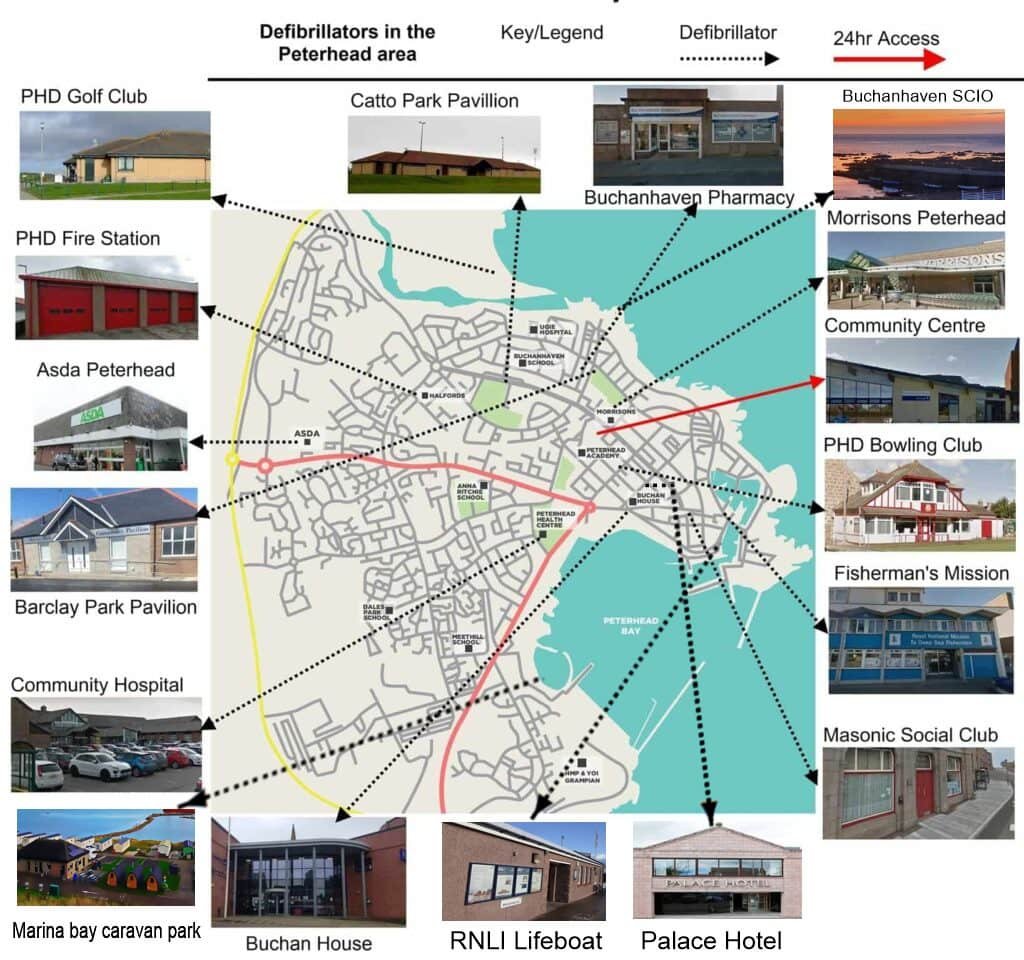
24/7 AVAILAILITY
- Aileen’s Childrenswear, 5-7 Queen Street
- Buchanhaven Harbour, Harbour Street
- Buchanhaven Hearts F.C, Victoria Road
- Buchanhaven Pharmacy, Skelton Street
- Buchan House, St. Peter Street
- Community Centre, Queen Street
- Menshed, 1 Skene Street
- Palace Hotel, Prince Street
- Peterhead F.C. Stadium, Balmoor Terrace
- Peterhead Fire Station, 1 Grange Road
- Police Scotland, St. Peter Street (Mobile)
- The Harbour Lights, 122-124 Longate
- Webster’s Pharmacy, 7 Queen Street
LIMITED AVAILABILITY
- ARC Cinema, 63 Marischal Street
- Asda Supermarket, Longside Road
- Baptist Church, 49 King Street
- Barclay Park Pavilion, Hay Crescent
- Bowling Club, 88 St. Mary Street
- Catto Park Sports Pavilion, Balmoor Terrace
- Community Centre (Internal), Queen Street
- Congregational Church, 94 Queen Street
- Fisherman’s Mission, 8 Union Street
- Golf Club, Riverside Road
- HAWCO, 20-28 York Street
- Health Centre, Links Terrace
- RNLI Lifeboat Station, West Pier
- Marina Bay Caravan Park, South Road
- Masonic Social Club, 20 Broad Street
- Morrisons Supermarket, Queen Street
- Procurator Fiscal Office, 70 St. Peter Street
- Sheriff Court, 35 Queen Street
- Ugie Salmon, Ugie Road
- Leisure Marina, Lido
- PPA Harbour Office Control Tower, West Pier
- PPA Maintenance Workshop, Baltic Place
- Fish Market Boot Room, Alexandra Parade
- Shiplift Coordinator’s Office, Farmer’s Lane
24 Hour Access Defibrillators nearest Peterhead
Boddam—Park Garage
– 36 Harbour Street, Boddam, AB42 3AU
Crimond Primary School
– 23 Logie Road, Crimond, AB43 8QL
Hatton Community Hall
– Station Road, Hatton, AB42 0HZ
How to use a Automated external defibrillators (AED).
By using a defibrillator before an ambulance arrives, you can significantly increase someone’s chance of survival.
1 STAGE
After performing a primary survey, and you find someone is unresponsive and not breathing normally, ask a helper to call 999 or 112 for emergency help while you start CPR. Ask a helper to find and bring a defibrillator, if available.
- If you’re on your own use the hands-free speaker on a phone, so you can start CPR while speaking to ambulance control.
- Do not leave a casualty to look for a AED yourself, the ambulance will bring one.
2 STAGE
When the helper returns with a defibrillator, ask for it to be switched on and to take the pads out, while you continue CPR. They should remove or cut through clothing to get to the casualty’s bare chest. They also need to wipe away any sweat. The AED will give you voice prompts on what to do.
3 STAGE
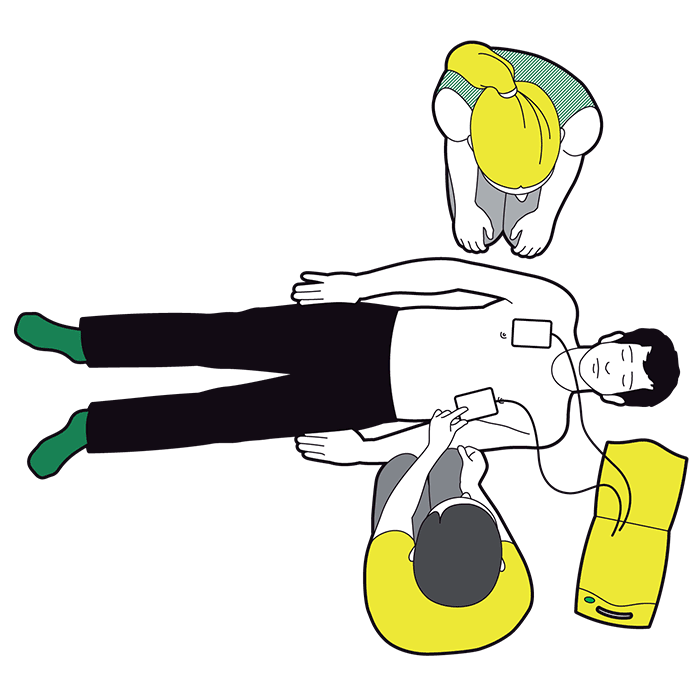
They should attach the pads to the casualty’s chest, by removing the backing paper. Apply the pads in the positions shown.
- The first pad should be on the upper right side below the collar bone.
- The second pad should be on the casualty’s left side below the arm pit.
4 STAGE
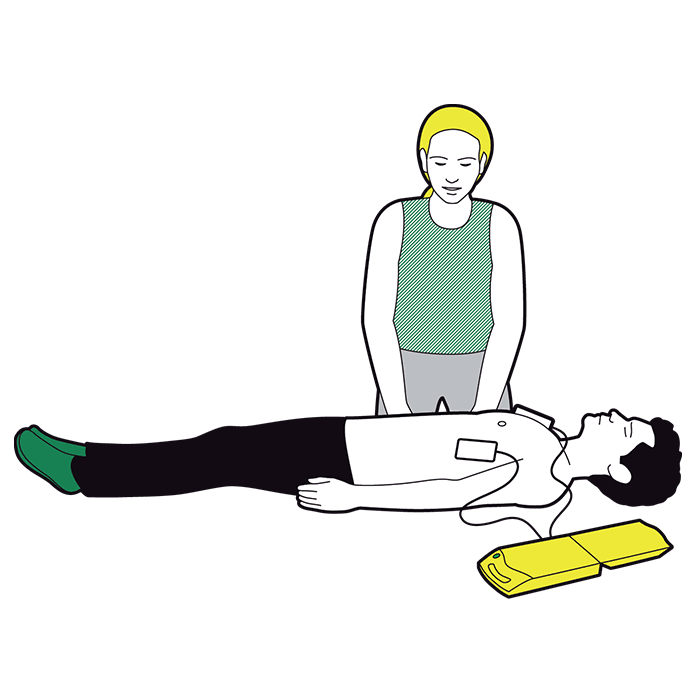
The AED will analyse the heart’s rhythm. Stop CPR and make sure no one is touching the casualty. It will then give a series of visual and verbal prompts that should be followed.
- If the AED tells you that a shock is needed, tell people to stand back. The defibrillator will tell you when to press the shock button. After the shock has been given the AED will tell you to continue CPR for two minutes before it re-analyses.
- If the AED tells you that no shock is needed continue CPR for two minutes before the AED re-analyses.
5 STAGE
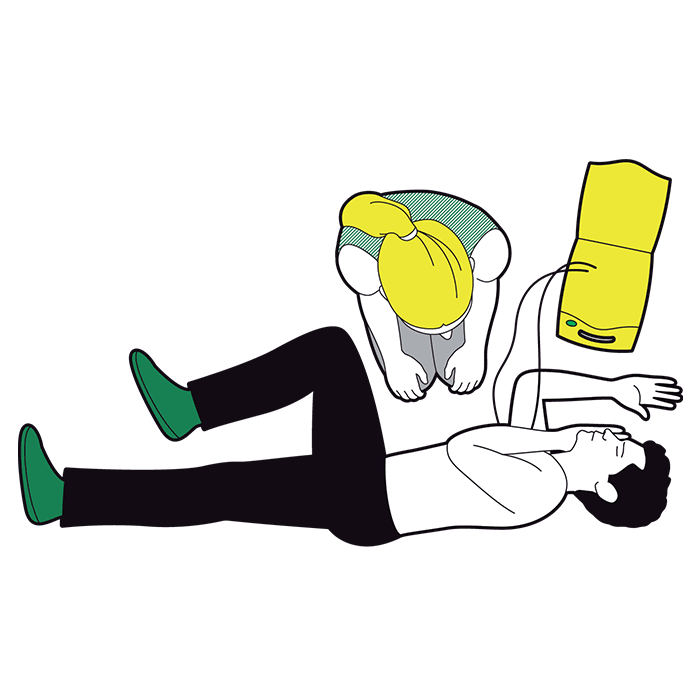
If the casualty shows signs of becoming responsive, such as coughing, opening eyes or speaking, and starts to breathe normally, put them in the recovery position. Leave the AED attached. Monitor their level of response and prepare to give CPR again if necessary.